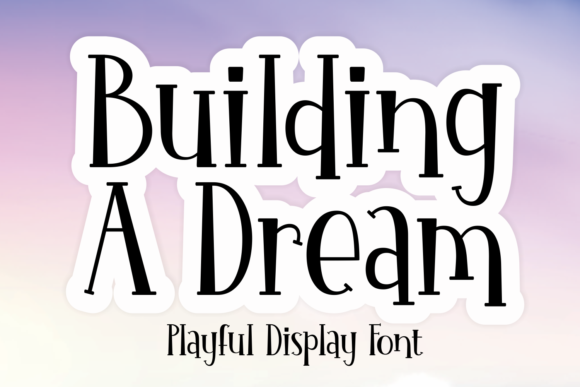
Evaluating Building a Dream for Design Projects
In the landscape of digital and print typography, selecting the right typeface is often one of the most critical decisions a designer faces. The font chosen sets the tone, conveys emotion, and guides the reader’s eye through the content. Among the vast array of available typefaces, Building a Dream has emerged as a notable option for those seeking a blend of inspiration and playfulness. This display font is characterized by its versatile nature, making it suitable for a wide variety of creative applications. For designers, crafters, and brand managers evaluating their next project, understanding the specific characteristics, strengths, and limitations of Building a Dream is essential to making an informed decision.
Understanding Building a Dream
Building a Dream is classified primarily as a display font. Unlike body text fonts, which are designed for readability over long passages, display fonts are intended to be used in larger sizes to grab attention and convey a specific mood. Building a Dream fits this category perfectly. Its design language is described as both inspiring and playful, suggesting a personality that is approachable yet energetic. The letterforms likely feature unique stylistic details that distinguish it from standard sans-serif or serif fonts, offering a visual texture that can elevate simple layouts into something more dynamic.
The versatility of Building a Dream is one of its defining features. While many decorative fonts are niche and limited to very specific contexts, Building a Dream appears to bridge several gaps. It can serve as a headline for a blog post, a title for a social media graphic, or even a focal point in physical crafting projects. This adaptability makes it an attractive candidate for users who need a single font to handle multiple aspects of a brand identity or a creative portfolio.
Why Consider Building a Dream?
When evaluating typefaces, designers often look for fonts that can communicate complex emotions with minimal effort. Building a Dream offers several reasons why it might be the right choice for your project:
- Emotional Resonance: The "inspiring" quality of the font allows it to evoke feelings of optimism, creativity, and forward momentum. This is particularly useful for brands in the education, wellness, or startup sectors.
- Visual Interest: Its playful nature ensures that designs do not feel sterile or overly corporate. It adds a human touch to digital and print materials, making them more engaging to the viewer.
- Craft Compatibility: As noted in its description, Building a Dream is well-suited for craft projects. Whether used in digital cut files for vinyl decals or as inspiration for hand-lettering, it translates well across mediums.
- Brand Differentiation: In a sea of uniform sans-serif headlines, a distinctive display font like Building a Dream can help a brand stand out. It signals creativity and a willingness to experiment.
Benefits and Tradeoffs
No typeface is without its tradeoffs. When considering Building a Dream, it is important to weigh its benefits against potential limitations to ensure it aligns with your project goals.
The Benefits
The primary benefit of Building a Dream is its ability to come alive on the page. Because it is a display font, it commands attention. When used correctly, it can reduce the need for additional graphical elements, allowing the typography itself to carry the visual weight of the design. This can lead to cleaner, more sophisticated layouts where the text is the hero. Furthermore, its versatility means it can be paired with simpler, neutral fonts for body text, creating a balanced hierarchy that is easy to read while still maintaining a strong aesthetic identity.
The Tradeoffs
However, the very qualities that make Building a Dream attractive also present challenges. Its playful and decorative nature may not be appropriate for all industries. For example, a law firm, a medical institution, or a financial service provider might find the font too informal or lacking in seriousness. Additionally, as a display font, it is generally unsuitable for long blocks of text. Using it for paragraphs would hinder readability and cause eye strain for the audience. Designers must also consider licensing costs and technical support; unlike ubiquitous system fonts, specialized display fonts may require specific licenses for commercial use.
Situations Where Building a Dream Is a Strong Fit
To determine if Building a Dream is the right tool for the job, consider the following scenarios where it excels:
- Creative Portfolios: For artists, photographers, or designers showcasing their work, Building a Dream can add a personal flair to headings and section titles without overwhelming the artwork.
- Event Marketing: Posters, flyers, and digital banners for workshops, art shows, or community events benefit from the font’s inspiring and energetic vibe.
- Lifestyle Brands: Brands focused on home decor, handmade goods, or personal development often rely on warmth and authenticity. Building a Dream supports these values through its playful character.
- Digital Crafts: Users creating SVG files for Cricut or Silhouette machines will find Building a Dream useful for creating t-shirts, mugs, and stickers where legibility at smaller scales is managed by the size of the letters rather than paragraph structure.
When to Consider Alternatives
While Building a Dream is a capable font, it is not a universal solution. There are situations where alternative typefaces may be more effective:
- Corporate Formality: If the goal is to establish authority, trust, and stability, a traditional serif or a clean, geometric sans-serif would be more appropriate. Building a Dream’s playfulness might undermine the perceived professionalism.
- High-Density Information: For interfaces, dashboards, or reports where space is at a premium and quick scanning is required, highly legible, neutral fonts are superior. The decorative elements of Building a Dream could distract from the data.
- Minimalist Aesthetics: If the design philosophy relies on extreme minimalism, the character of Building a Dream might introduce too much visual noise. A simpler, more understated font would better serve a "less is more" approach.
Practical Decision-Making Insights
Before committing to Building a Dream for a major project, take the following practical steps to evaluate its fit:
Test Pairings: Typography is rarely about a single font. Test Building a Dream against various body text options. Does it pair well with a clean sans-serif? Does it clash with a classic serif? The success of the font often depends on how well it harmonizes with supporting typefaces.
Scale Testing: View the font at different sizes. Ensure that the playful details remain distinct and do not become muddy when scaled down for mobile screens or small print materials. Conversely, check if it holds up when enlarged for large format prints.
Audience Alignment: Ask who the end-user is. Will they perceive the font as welcoming and creative, or as unprofessional and distracting? Understanding the audience’s expectations is crucial for effective communication.
Licensing Review: Verify the license terms. Ensure that the usage you intend—whether personal, editorial, or commercial—is covered. Avoid legal complications by choosing the correct license tier from the outset.
Conclusion
Building a Dream is a compelling choice for designers looking to inject inspiration and playfulness into their work. Its versatility allows it to span digital and physical mediums, making it a valuable asset for crafters and creatives alike. However, its effectiveness hinges on context. It is best suited for projects that prioritize emotional connection and visual impact over strict formality or high-density information delivery. By carefully evaluating the tradeoffs and testing the font within the specific constraints of the project, designers can determine whether Building a Dream is the right foundation for bringing their vision to life.