Injecting Playful Energy: Why Honey Mushroom is the Ultimate Font for Bold Branding
In a digital landscape saturated with minimalist sans-serifs and sterile geometric typefaces, finding a font that commands attention without sacrificing readability can feel like searching for a needle in a haystack. Enter Honey Mushroom, a cartoonish display font that doesn’t just sit on your canvas—it pops off it. Inspired by the bold, unapologetic aesthetics of modern brand logos, this typeface brings a level of character and personality that is often missing from standard design toolkits. It is not merely a collection of glyphs; it is a statement piece designed to infuse creative projects with a cool, playful touch.
Whether you are a seasoned graphic designer looking to add a signature flair to client work or a small business owner crafting your own identity, understanding the unique capabilities of Honey Mushroom can transform your visual communication. This article explores why this specific font has become a go-to choice for watermarking, branding, and various high-impact design applications, and how you can leverage its distinct characteristics to make your ideas come alive.
The Anatomy of Attitude: What Makes Honey Mushroom Unique?
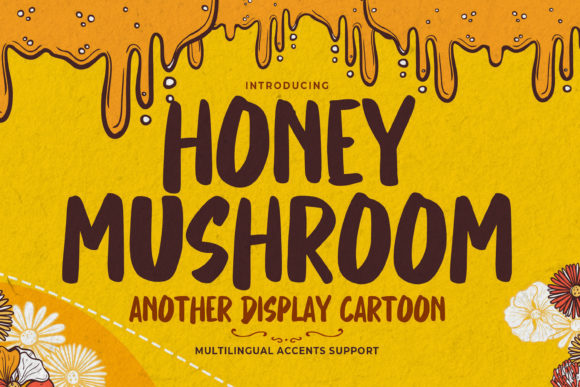
To appreciate Honey Mushroom, one must first look at its structural DNA. Unlike traditional serif or sans-serif fonts that prioritize neutrality, this display font is engineered for impact. Its inspiration stems from contemporary logo designs where strong characteristics are paramount. The letters are thick, rounded, and slightly irregular in a way that feels hand-crafted yet perfectly controlled. This balance between "cartoonish" and "professional" is its greatest strength.
The font’s weight allows it to hold its own against busy backgrounds, making it exceptionally effective for scenarios where visibility is key. However, its curves soften the aggression often associated with heavy block letters, injecting a sense of fun and approachability. This duality makes it versatile. It can scream excitement for a summer festival poster or whisper sophistication in a boutique wedding invitation, depending on how it is styled. When you choose Honey Mushroom, you are choosing a typeface that refuses to be ignored but remains inviting rather than intimidating.
From Watermarks to Logos: Practical Applications
The versatility of Honey Mushroom is best demonstrated through its practical application across various design mediums. Because of its robust form, it excels in areas where text needs to function as both information and image. Below are several key areas where this font shines:
- Photography Watermarking: One of the most common uses for Honey Mushroom is overlaying photographer names or studio brands onto images. Standard thin fonts often get lost in the details of a photograph. In contrast, the bold strokes of Honey Mushroom ensure that the credit line is legible without overpowering the subject. It adds a layer of professional polish while protecting intellectual property.
- Logo Design and Branding: For startups and creative agencies aiming for a memorable identity, Honey Mushroom offers immediate recognition. Brands with strong characteristics need typography that reflects their confidence. Using this font for a primary logo element can convey stability mixed with creativity. It works particularly well for businesses in the food, entertainment, children’s products, and lifestyle sectors.
- Invitations and Stationery: Traditional stationery can sometimes feel rigid. By incorporating Honey Mushroom into wedding invitations, event programs, or corporate greeting cards, designers introduce a modern twist. It breaks the monotony of classic scripts and serif fonts, appealing to audiences who value modernity and warmth.
- Product Packaging and Labels: In retail environments, shelf appeal is everything. A product label featuring Honey Mushroom stands out among competitors using generic typefaces. Whether it’s a craft beer label, a cosmetic jar, or a snack package, the font’s playful nature suggests quality and personality, encouraging consumers to pick up the item and read further.
Elevating Creative Projects with Strategic Placement
Using Honey Mushroom effectively requires more than just dropping it into a text box. To truly notice how it makes your ideas come alive, consider the context and styling. Here are some strategic recommendations for integrating this font into your workflow:
- Contrast is Key: Because the font is visually heavy, pair it with lighter, cleaner elements. If you use Honey Mushroom for a headline, consider using a simple sans-serif or a delicate script for body copy. This creates a hierarchy that guides the eye and prevents visual clutter.
- Color Psychology: The font’s playful nature pairs well with vibrant colors. Think warm yellows, deep oranges, or rich browns to echo the "honey" theme, or bright neons for a more energetic, youth-oriented vibe. Avoid muted grays unless you are aiming for a stark, industrial aesthetic, which may clash with the font’s inherent warmth.
- Texture and Effects: Don’t be afraid to experiment with textures. Applying a subtle drop shadow, a gradient fill, or even a slight distortion effect can enhance the cartoonish quality of Honey Mushroom. For window art or large-scale signs, adding texture can help the text blend with the environment while remaining distinct.
- Spatial Awareness: Give the letters room to breathe. Due to their thickness, these characters require adequate spacing (kerning and tracking) to maintain readability. Crowding them together can result in a blob-like appearance that loses its individual charm.
Why Modern Designers Are Turning to Character-Driven Type
The shift toward fonts like Honey Mushroom reflects a broader trend in design: the move away from invisible typography toward expressive lettering. In an era where users scroll rapidly through content, static, boring text fails to capture attention. Designers are increasingly seeking tools that allow for instant emotional connection.
This font fits seamlessly into modern workflows because it bridges the gap between digital and physical media. It renders sharply on screens, ensuring crisp displays on social media graphics and websites, yet it also translates beautifully to print materials like scrapbooking tags, special event signage, and photography overlays. Its adaptability means designers can maintain a consistent brand voice across diverse platforms without needing multiple typefaces.
Furthermore, the "cool and playful" tag associated with Honey Mushroom resonates with current consumer preferences. Audiences today crave authenticity and personality. They respond better to brands that feel human and relatable rather than corporate and distant. By utilizing a font that embodies these traits, designers can subtly communicate these values before the viewer even reads the message.
Considerations Before You Download
While Honey Mushroom is a powerful asset, it is not a universal solution. Like all display fonts, it has limitations. It is generally not suitable for long-form body text due to its decorative nature. Reading paragraphs set entirely in this font can cause eye strain and fatigue. Instead, reserve it for headlines, titles, short phrases, and graphical text elements.
Additionally, consider the tone of your project. While it is playful, it may not be appropriate for highly formal contexts such as legal documents, academic papers, or somber memorial services. Always align the font’s personality with the message you intend to convey. When used appropriately, however, Honey Mushroom is an invaluable tool for adding that extra spark of creativity to any project.
Final Thoughts
In conclusion, Honey Mushroom is more than just a font; it is a catalyst for creativity. Its ability to combine strong, modern characteristics with a whimsical, cartoonish charm makes it uniquely suited for a wide array of applications—from watermarks and logos to packaging and invitations. By understanding its strengths and applying it strategically, you can elevate your designs from ordinary to extraordinary.
So, add it to your most creative ideas. Experiment with its weight, play with its color, and watch as it transforms your concepts into tangible, engaging realities. In a world that demands attention, let Honey Mushroom be the voice that speaks loudest and clearest.