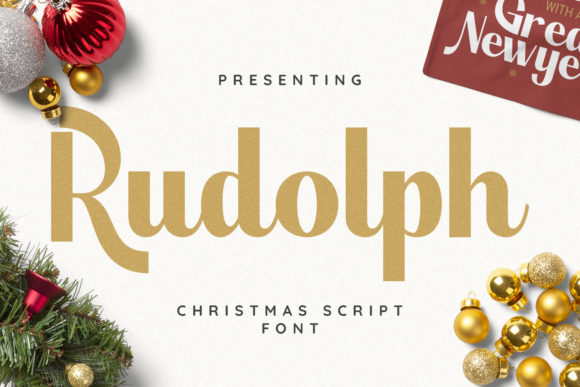
Rudolph: The Fun Display Font That Elevates Any Design
Let’s be honest: finding a font that strikes the perfect balance between playful and professional can feel like searching for a needle in a haystack. You want something that grabs attention, but you don’t want it to look childish or unprofessional. Enter Rudolph. This isn’t just another decorative typeface; it is a cool and fun display font designed to bring immediate energy and personality to your projects. Whether you are a seasoned graphic designer tweaking a final layout or a small business owner creating your first social media post, Rudolph has the potential to elevate any creation.
The charm of Rudolph lies in its versatility. It manages to be quirky without being overwhelming, bold without shouting too loudly. It acts as an incredible asset to your fonts library because it adapts to various tones. One moment it might be setting up a festive vibe for a holiday sale, and the next, it could be adding a touch of whimsy to a personal blog header. Understanding why this specific typeface works so well requires looking at its design characteristics and how they translate into real-world applications.
What Makes Rudolph Stand Out?
At its core, Rudolph is a display font. This means it is intended for headlines, titles, logos, and short bursts of text rather than long paragraphs of body copy. Display fonts are all about character, and Rudolph delivers that in spades. Its letterforms feature unique curves and distinct shapes that catch the eye immediately. Unlike standard sans-serif fonts that prioritize readability above all else, Rudolph prioritizes expression.
One of the most appealing aspects of Rudolph is its "cool" factor. It avoids the overly rigid structures of traditional serif fonts while maintaining enough structure to remain legible. The strokes are clean, and the spacing is thoughtfully considered, ensuring that even when the letters are large and prominent, they don’t feel cramped or chaotic. This makes it particularly effective for:
- Brand Identity: Creating a memorable logo that stands out on a crowded shelf or screen.
- Event Marketing: Catching the eye of passersby with posters and flyers.
- Digital Headers: Making website titles pop against busy backgrounds.
When you use Rudolph, you aren’t just picking a font; you are picking a mood. It suggests creativity, approachability, and a bit of fun. For creators who want their work to feel human and relatable, Rudolph provides that emotional connection instantly.
Practical Applications Across Different Fields
While Rudolph shines in creative industries, its utility extends far beyond graphic design studios. Let’s look at how different professionals and hobbyists can integrate this font into their workflows effectively.
For Small Business Owners and Marketers
If you run a boutique coffee shop, a handmade jewelry store, or a local bakery, your visual branding needs to communicate warmth and quality. Rudolph is perfect for menu boards, promotional banners, and email newsletter headers. Imagine a weekend special announcement written in Rudolph—it feels inviting and exciting. It helps break the monotony of standard corporate communication, making your brand feel more like a friend than a faceless entity. Use it to highlight key offers or new product launches where you need immediate visual impact.
For Educators and Content Creators
Educators often struggle to make learning materials engaging, especially for younger audiences or when trying to keep adult learners interested. Rudolph can transform a dry worksheet into something visually stimulating. Teachers can use it for chapter titles, quiz headers, or classroom decorations. Similarly, bloggers and podcasters can use it to create consistent, branded thumbnails for YouTube videos or Instagram stories. The font’s distinct style helps establish a recognizable visual identity across different platforms.
For Personal Projects and Hobbyists
Not everyone uses fonts for profit. Many people enjoy crafting, scrapbooking, or designing party invitations. Rudolph is a fantastic choice for these personal endeavors. It adds a celebratory tone to birthday cards, wedding invitations (for non-traditional weddings), or home decor prints. Because it is a display font, it works beautifully in larger sizes, allowing you to focus on the aesthetic impact without worrying about reading comprehension issues that smaller text might present.
How to Use Rudolph Effectively
To get the most out of Rudolph, it is important to understand the principles of pairing and contrast. Since Rudolph is already quite expressive, it works best when given room to breathe. Here are some practical tips for using it in your designs:
- Pair with Simplicity: Because Rudolph is complex and fun, pair it with simple, clean body fonts. A neutral sans-serif or a classic serif will provide the necessary contrast, allowing Rudolph to take center stage without competing for attention.
- Limit Your Usage: Remember that this is a display font. Use it for headlines, logos, and short phrases. Avoid using it for long blocks of text, as it can become fatiguing to read. Save the heavy lifting for your body copy fonts.
- Play with Scale: Don’t be afraid to go big. Rudolph looks stunning when scaled up. Large typography creates a strong visual hierarchy and ensures your message is seen from a distance.
- Consider Color: The font’s shape interacts interestingly with color. Bold, vibrant colors can enhance its playful nature, while monochromatic schemes can give it a more sophisticated, modern edge.
Another consideration is context. While Rudolph is versatile, it may not be suitable for every single project. If you are designing a legal document, a medical report, or a formal academic paper, Rudolph would likely undermine the seriousness of the content. In those cases, stick to more traditional typefaces. However, for anything related to lifestyle, entertainment, retail, education, or creative arts, Rudolph is a powerful tool.
Why Rudolph Belongs in Your Library
Ultimately, the decision to add a font to your collection comes down to value and utility. Rudolph offers both. It is not a niche font that you will only use once a year for Christmas decorations. Instead, its broad appeal allows it to serve multiple purposes throughout the year. From a summer sale banner to a winter holiday greeting, Rudolph adapts to the season while maintaining its core personality.
For beginners, it removes the guesswork from design. When you are unsure about which font will convey the right message, choosing Rudolph is often a safe bet for projects requiring energy and friendliness. For professionals, it adds a layer of polish and intentionality to their work, showing clients that attention to detail matters.
In a digital landscape saturated with generic templates and stock imagery, standing out is crucial. Rudolph provides that competitive edge by injecting life into static designs. It reminds viewers that there is a human behind the brand, someone who cares about aesthetics and experience. By incorporating Rudolph into your toolkit, you are investing in a resource that can help tell your story more vividly and memorably.
Whether you are designing a logo for a new startup, creating a flyer for a community event, or simply decorating your personal workspace, Rudolph proves that good design doesn’t have to be boring. It can be cool, it can be fun, and above all, it can be effective. Explore its capabilities, experiment with different combinations, and discover how this incredible asset can transform your next project.